


Dog Care & Advice
Making Rainy Days Easier for You and Your Dog
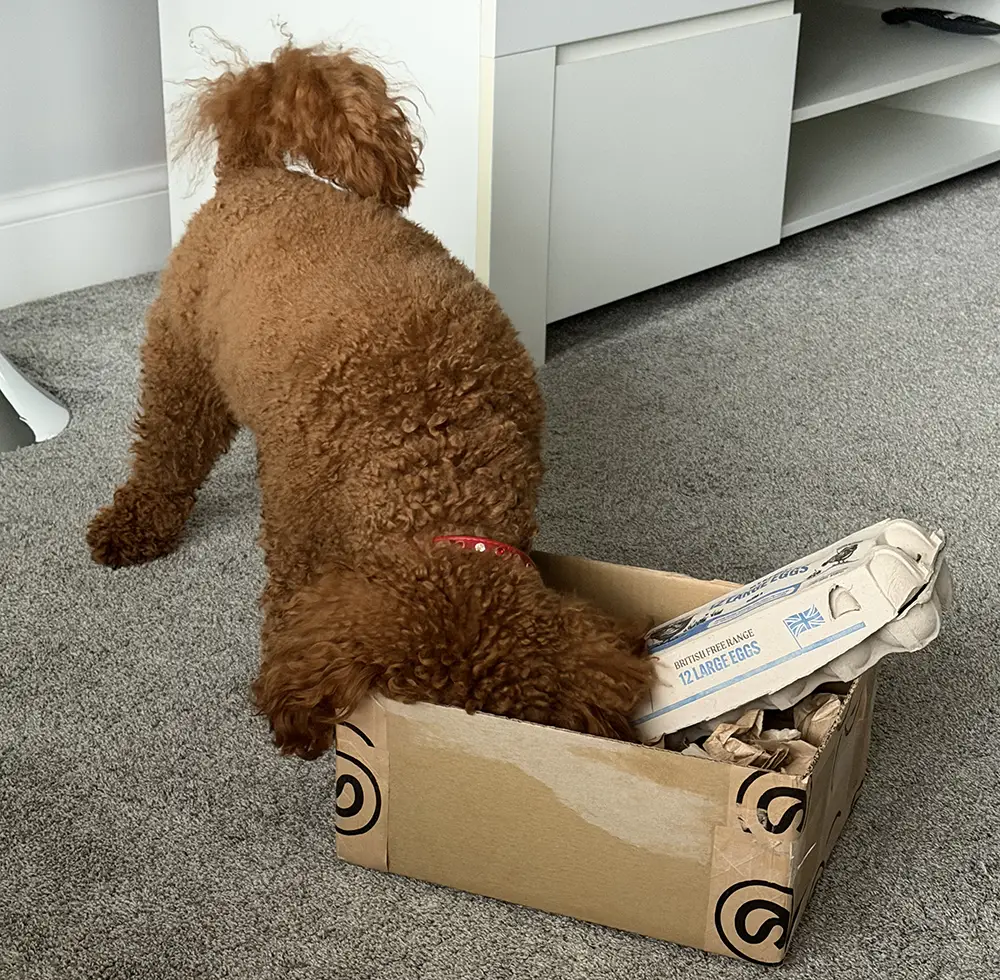
January and February can be frustrating months for dog owners. Short daylight hours, heavy rain, frost and snow often mean fewer walks, or much shorter ones. While physical exercise is important, dogs also rely heavily on mental stimulation. When that drops away, boredom often shows up as restlessness, destructive behaviour, excessive barking or general mischief.
The good news is that you can meet a large part of your dog’s needs indoors. A mentally tired dog is usually a settled and content dog, even if the weather outside is uninviting.
The activities below are designed for people who are not sure where to start. They require minimal equipment, little space, and can be adapted to suit different dogs.
Cardboard Chaos. A Favourite Game in This House
This is a firm favourite with Kevin, our miniature poodle, and one of the most flexible enrichment games you can set up at home.

A stash of everyday cardboard is all that is needed. Cardboard boxes, toilet roll tubes, kitchen roll tubes, egg boxes and brown packing paper all work. Nothing fancy. Nothing bought specially. How to set it up
- Fold kibble or treats into scrunched up brown paper and push them inside cardboard tubes
- Cut the ends of the tubes and fold them over so the dog has to work out how to open them
- For higher value rewards, wrap a rabbit ear or other long lasting chew in paper, then place it inside an egg box
- Put everything inside a cardboard box and close it
Normal kibble works perfectly well for most of this game, but adding a few higher value treats keeps the dog engaged and encourages them to keep working once the easier items are gone.
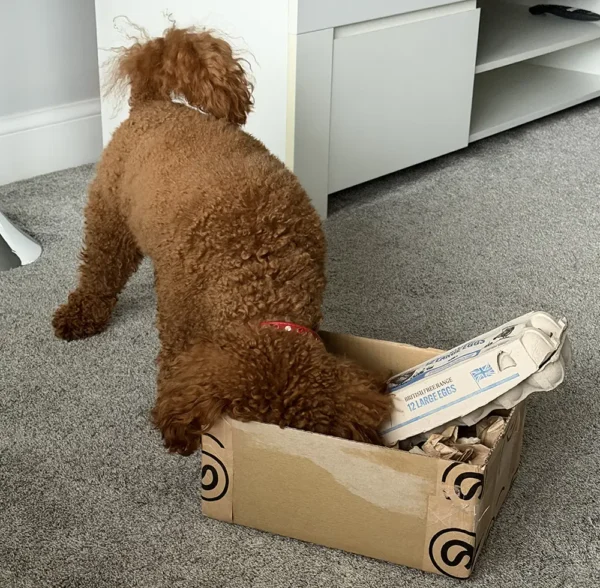
Why it works This taps directly into natural foraging behaviour. Dogs sniff, tear, paw, problem solve and persist. It also allows dogs to work independently, which makes it ideal when you want them occupied without needing to be involved.
Scent Games. Where Dogs Really Shine
Sniffing is where dogs excel, and scent games are one of the most effective ways to tire them mentally indoors. Simple scent setups that work
- Red Kongs, which have a distinct scent profile dogs can easily identify
- Plant pots with treats hidden inside
- A mix of empty and baited containers so the dog has to work out which ones matter
Letting the dog watch the setup at first helps them understand the game. Once they grasp what they are looking for, items can be hidden out of sight to increase the challenge.
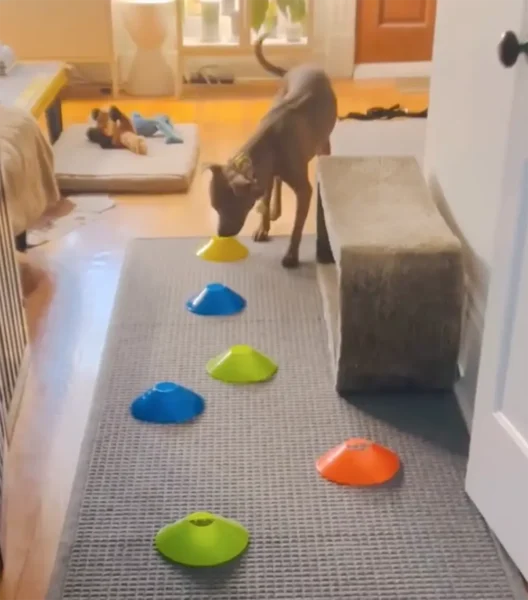
Why it works Sniffing is mentally demanding. It engages a large part of the brain and encourages calm, focused persistence. Ten minutes of proper scent work can take the edge off far more effectively than a short, frustrated walk in bad weather.
The Towel Roll Game. A Simple Classic That Really Works
The towel roll is one of the easiest enrichment games to set up at home and works well for dogs who enjoy problem solving. What the towel roll is A towel laid flat, food scattered across it, then rolled up so the dog has to unroll and nose through it to reach the food.

How to set it up
- Lay a towel flat on the floor
- Scatter kibble or treats along the length
- Roll the towel tightly from one end
- Tie a loose knot for confident dogs
- Supervise and untie if frustration builds
A variation. The fleece plait
A fleece plait stuffed with kibble and treats creates an even longer lasting version of the same idea. Food is pushed deep into the plait so it cannot be shaken out, forcing the dog to slow down and work through it properly. Why it works Both versions combine scent work, persistence and physical manipulation. They slow dogs down and engage the brain without overstimulating.
Five Minute Training Games That Actually Tire the Brain
Training becomes enrichment when it is treated as a game rather than a lesson. Instead of running through cues mechanically, pick one challenge and stick to it for five minutes.
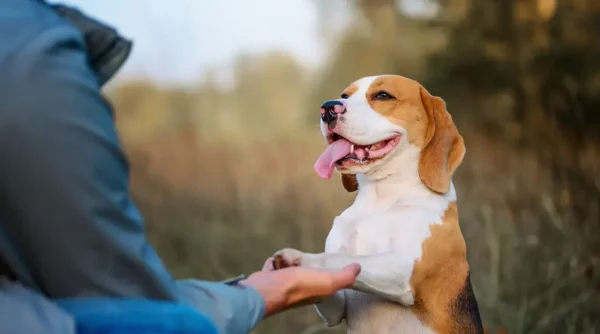
Examples that work well indoors:
- Ask for a sit or down, take one step away, then return and reward. Increase distance slowly.
- Ask for a known behaviour, pause for a second longer than usual, then reward calm waiting.
- Chain two simple behaviours together, such as sit then down, before rewarding.
These short sessions demand focus and self control. Stop while the dog is still engaged. Ending early is far more effective than pushing for more. Why it works Learning and self control are mentally tiring. Five minutes of focused thinking can be more draining than repetitive physical activity.
Structured Indoor Play. Turning Play Into Enrichment
Indoor play becomes enrichment when structure is added. Instead of continuous tug or fetch, break the game into clear moments.

A simple structure:
- Ask for a calm behaviour before play starts
- Play for a few seconds
- Pause the game and wait for calm again
- Restart only when the dog settles
This can be done with tug, soft toys or gentle fetch in a hallway. Why it works The dog has to think, wait and regulate excitement. That mental effort prevents play from becoming frantic and helps burn off excess energy in a controlled way.
Calm Evening Enrichment. Ending the Day Well
Not every game should increase energy, especially in the evening. Calm enrichment focuses on steady, repetitive actions:
- Long lasting chews that encourage slow, relaxed engagement
- Licking activities such as stuffed or frozen feeders
- Gentle handling, brushing or paw checks done slowly and positively
These activities fit naturally into the end of the day when dogs are ready to settle.
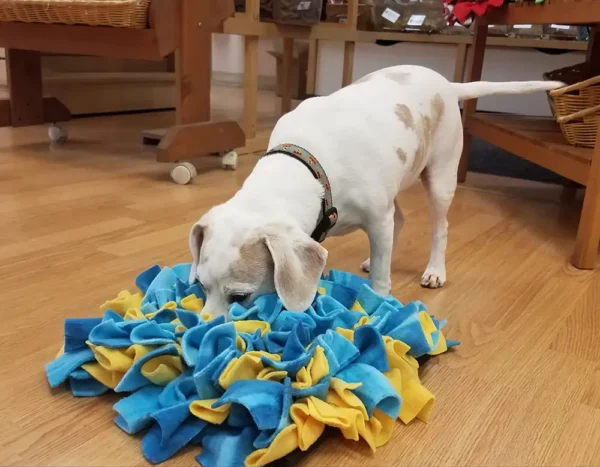
Why it works Calm, repetitive actions help dogs self regulate and wind down. They are especially useful after stimulating games or on days when routines have been disrupted.
A Small Reset as Spring Approaches
Winter often means damp collars, muddy straps and quick routines. As the days slowly improve, many people naturally refresh habits and equipment. Checking fit, condition and comfort of everyday items like collars is a sensible part of that reset. A collar that has been worn daily through winter may be functional but tired, and spring walks tend to be longer and more frequent. It is a small change, but one that contributes to comfort, safety and routine. This post is designed to be returned to whenever the weather turns. Mental stimulation is not a replacement for walking, but it is one of the most effective tools for keeping dogs content when conditions are less than ideal.